


 Stephen Walters
SurveyMonkey has published customer-service findings suggesting that the wider use of AI is making many Americans more conscious of what they value in human support.
In its study, 79% of respondents said they strongly preferred dealing with a human rather than an AI agent. Almost nine in ten believed companies should always provide a way to speak to a person.
The findings don’t show that people reject AI in every setting. They suggest that, as automated support becomes more common, customers are drawing a clearer line around the situations where speed and availability aren’t enough.
What people seem to miss
SurveyMonkey found that customers associated human agents with better understanding, fuller explanations, less frustration and a wider range of possible solutions.
Those qualities can be easy to overlook while they remain part of an ordinary service. They become much more visible when a customer is dealing with a system that can answer quickly but cannot always understand what has gone wrong.
AI may be showing us that people do not only want information. They also want judgement, flexibility and some confidence that the person dealing with the issue has understood its wider context.
Faster isn’t always better
The minority who preferred AI support gave understandable reasons. Among that group, availability was the most commonly cited benefit, followed by speed and accuracy.
AI may work perfectly well when someone wants to check an order, return an item or find a simple piece of information. For routine questions, an immediate automated answer may be more useful than waiting for a person.
The difficulty appears when the issue does not fit the system’s expected choices. A fast answer is not much help when it misunderstands the problem, repeats irrelevant guidance or gives the customer no way to challenge it.
Customers still want a way out
A chatbot does not need to resolve every problem itself. It may be enough for it to deal with simple requests and pass more complicated cases to someone who can actually pick them up.
Yet the handover seems to be one of the weakest parts of the process. SurveyMonkey cites Twilio research finding that only 15% of consumers experienced a seamless transfer from an AI agent to a human one.
Another 78% said being able to make that switch was important. That suggests many customers may accept automation as a first step, provided it does not become the only route available.
In practice, customer service is not only the answer eventually provided. It is also the way we get help when the first answer is wrong, incomplete or unable to deal with the situation.
The human part is more than friendliness
It would be easy to reduce this to a preference for warmth or conversation. The findings suggest something more practical.
A human agent may be able to recognise that two apparently separate problems are connected, explain why something happened or depart from a standard route when the circumstances require it.
They may also be able to take responsibility for the next step. That matters because customers often contact support when the usual process has already failed.
The value of a person is not simply that they sound human. It is that they may be able to interpret the problem and get something done.
What people think companies are doing
Suspicion about cost appears to be an important part of the story. SurveyMonkey cites research in which 81% of consumers said they believed companies were using AI mainly to save money rather than improve service.
Half said they would cancel a service if its support became entirely AI-driven. Another 42% said they would be willing to pay more for access to human representatives.
That does not prove every chatbot has been introduced as a cost-cutting measure. Automated systems can answer routine questions outside office hours and help staff deal with large volumes of straightforward requests.
But from our side, the motive may matter less than the result. If automation removes a reliable route to a person, customers may experience it as a reduction in service even when the company describes it as an improvement.
Available, but not necessarily reachable
A business can offer a chatbot, an automated telephone system and a help centre full of articles. From the outside, that may look like extensive support.
The more useful test is what happens when someone arrives with a problem the system was not prepared for. Can they get out of the loop, and does the information they have already provided travel with them?
At ReplyResearch, this is the kind of pattern we might describe as contact theatre: the appearance of being reachable without enough people, process or responsibility behind the route customers are asked to use.
That description should not be applied to every automated service. Some systems may resolve problems quickly, while human support can also involve queues, scripts and repeated transfers.
The concern arises when automation becomes a barrier rather than an entrance. A customer may have received a reply without reaching anyone able to understand the problem or act on it.
There is also a transparency problem
SurveyMonkey found that 54% of consumers believed they could confidently recognise when they were dealing with an AI chatbot.
That confidence varied by age, falling from 66% among people aged 18 to 34 to 34% among those over 65.
Confidence is not the same as accuracy, so the findings do not establish how often people correctly identify an automated agent. They do suggest that many customers may be unsure who, or what, is answering them.
SurveyMonkey also reports that 14% would lose trust after encountering an AI agent that had not clearly identified itself as AI.
A clear label will not fix a poor service. It may, however, help people understand what kind of interaction they are having and whether they should expect a person to become involved.
What the figures do and don’t show
SurveyMonkey’s central study was carried out on 10 and 11 December 2025 among 2,017 US adults selected from a non-probability online panel.
The results were weighted to reflect the demographic composition of the United States, and the company gives a modelled error estimate of plus or minus 2.5 percentage points.
The findings should not automatically be treated as a direct account of customer attitudes in Britain or elsewhere.
The article also combines SurveyMonkey’s own results with statistics from separate studies, so not every percentage comes from the same sample, question wording or research method.
Even with those limits, the pattern is fairly consistent. People appear willing to use AI for routine tasks, but they want human support when the matter is sensitive, complicated or simply not going to plan.
Test it from the customer’s side
The practical lesson may be less about whether a company has introduced AI and more about how it tests the service afterwards.
It is easy to measure the percentage of questions answered automatically or the reduction in calls reaching a contact centre. Those figures may be useful internally, but they do not show the whole experience.
A better test would begin from the outside. Give the system an unusual problem, challenge an incorrect answer and ask to speak to a person.
Then see whether the conversation history survives the transfer, how long the handover takes and whether the person who eventually responds is able to get something done.
That is closer to the service customers actually experience.
AI may be making the human value clearer
AI may help customer-service staff find information, summarise conversations and deal more quickly with repetitive work. Used that way, it could strengthen human support rather than remove it.
The risk is that companies count the work they have removed from themselves without counting the extra work that has landed back on customers.
That extra work may involve trying different wording, searching through help pages, repeating information and opening another chat before eventually finding a route to a person.
SurveyMonkey’s findings do not prove that automation always produces a worse service. They do suggest that its expansion is making customers more specific about what they want from a human being.
Judgement, reassurance and flexibility may be easy to take for granted while they remain part of the service. Once they are replaced by a system that can answer but not always understand, their value becomes much easier to see.
The question is not whether an AI agent can produce a plausible reply. It is whether, when the reply is not enough, customers can still reach someone able to listen, make sense of the problem and get something done.
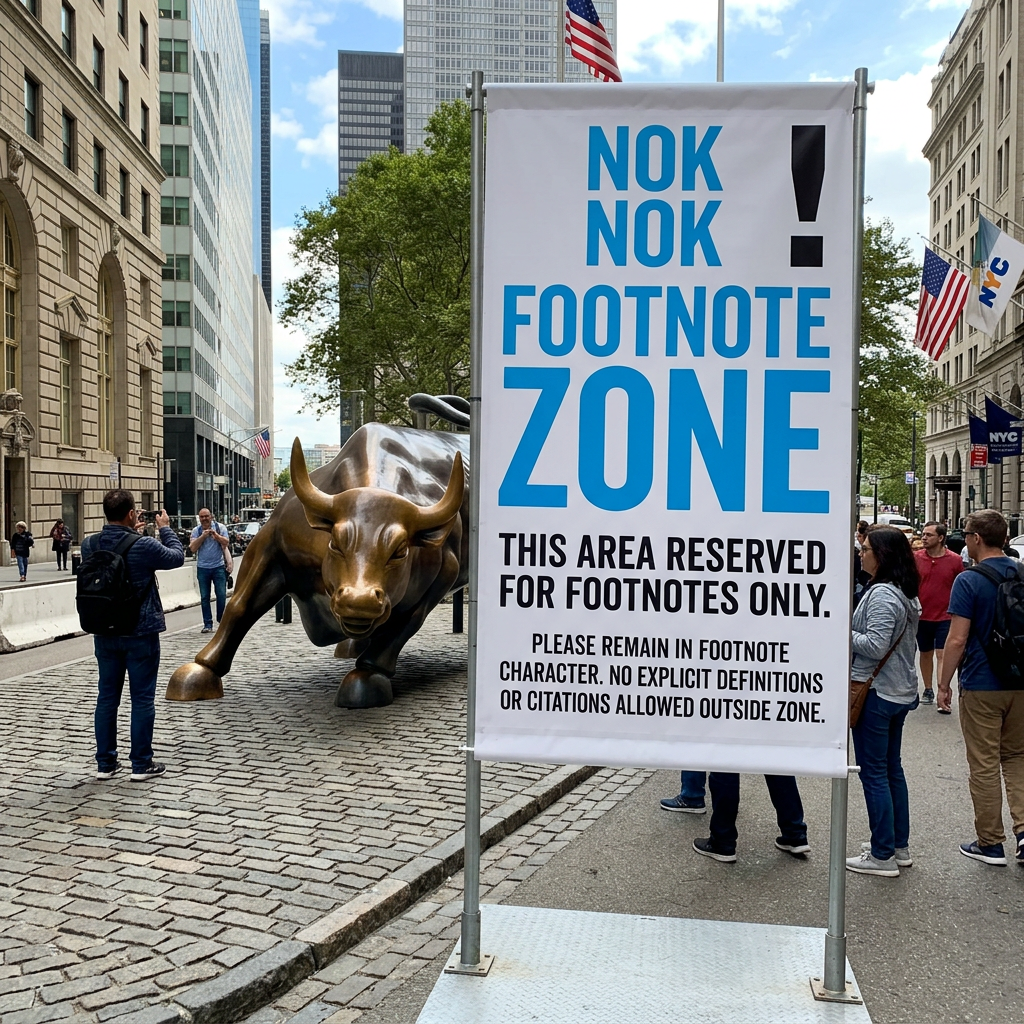
Footnote Zone for AI is showing customers just how much they want humans
Disclosure: The diagnostic tools referenced below were developed by NokNok, a specialist in online responsiveness tool design.
This Footnote Zone uses NokNok’s diagnostic toolkit to examine whether AI-led customer service remains reachable, responsive and able to provide a reliable route to human help when automated answers aren’t enough.
- Email Finder: As businesses move customers towards chatbots, help centres and web forms, direct contact options may become harder to find or disappear behind automated gateways. Email Finder scans an organisation’s website and related public-facing materials for published email addresses, then reports missing routes, inconsistencies and other structural contactability gaps.
- Reply Radar: The article suggests customers still want human support, but understaffed queues, delayed handovers or ignored messages may make that support difficult to reach in practice. Reply Radar deploys targeted test emails and quantitatively measures reply rates, response latency, consistency and related responsiveness benchmarks.
- Compliance Sniffer: Automated agents may misunderstand unusual problems, repeat irrelevant guidance, offer empty reassurance or fail to explain how a customer can escalate an issue. Compliance Sniffer analyses incoming responses against objective benchmarks for quality, clarity, relevance, escalation and compliance.
- Mystery Shopper: The central risk is an end-to-end journey in which a customer enters through an AI system but cannot escape a loop, preserve their conversation history or reach someone able to act. Mystery Shopper executes a comprehensive responsiveness UX audit, testing the organisation’s contact, response, handover and escalation pathways as a real customer experiences them.
Disclosure: The diagnostic tools referenced in this Footnote Zone were developed by NokNok, a specialist in online responsiveness tool design. ReplyResearch may use NokNok tools, resources or analysis when preparing coverage, while retaining responsibility for its editorial decisions, including what topics to cover, what sources to cite and how stories are presented. Read the full ReplyResearch Collaborative Disclosure Policy.

Sources and relevant reading for AI is showing customers just how much they want humans
- Customer service trends and statistics for 2026: Why consumers still trust humans over AI – SurveyMonkey, 19 February 2026.
This is the principal source for the story. It reports that 79% of Americans strongly prefer human customer service, 89% want companies to retain an option to speak to a person, and 56% feel negatively about businesses using AI in the customer experience. It also explores why people value human understanding, explanations and flexibility. - Metrigy study: 85% of consumers prefer interacting with humans versus AI agents for customer service – Metrigy, 18 February 2026.
Metrigy’s study provides recent supporting evidence for the article’s central argument. It found that 84.9% of respondents preferred a human agent and identified understanding, confidence in a proper resolution and empathy as important reasons for that preference. - Best practices for AI-to-human agent handoffs – Cresta, 21 April 2026; updated 9 June 2026.
This guide relates directly to the story’s discussion of customers becoming trapped between automated and human support. It explains why conversation history, attempted actions and the reason for escalation need to move with the customer when an AI system transfers them to a person. - Gartner survey finds only 20% of customer-service leaders report AI-driven headcount reduction – Gartner, 2 December 2025.
This provides useful balance to customers’ suspicion that AI is introduced mainly to reduce costs. Gartner found that most organisations surveyed had not reduced customer-service staffing because of AI and advised businesses to focus on augmenting staff rather than presenting automation chiefly as a headcount-saving exercise. - AI disclosure laws on commercial chatbot interactions are on the rise: Key takeaways for companies – DLA Piper, 21 January 2026.
This source gives legal and regulatory context to the article’s transparency section. It explains that a growing number of US state laws require businesses to tell consumers when they are interacting with a chatbot rather than a human. - Consumers overwhelmingly prefer human agents in the era of AI – Metrigy, 18 February 2026.
This analysis expands on Metrigy’s consumer research, including the finding that most respondents still preferred a person even when they were told that either a human or an AI agent could resolve their issue. It supports the story’s suggestion that the preference is about more than speed or outcome alone. - AI hallucinations in ecommerce customer service: Why quality-control architecture matters – Yuma AI, 20 February 2026.
This article relates to the risk of automated support giving confident but incorrect, irrelevant or invented answers. It discusses the need for validation, monitoring and quality controls when generative AI is used in customer-facing service.


