


 Peter Friedman
Accessibility is strictly written into laws on disability and communication. But replies? We’ll get back to you on that. Maybe. Eventually. Maybe not.
Recent research has carefully documented these familiar digital communications failures. Emails go unanswered for weeks, customers wait too long for help, and final replies often fail to resolve inquiries.
A major Which? investigation contacted eight prominent airlines through various channels like email, web forms, chat, and social media. It assessed speed, accuracy, and helpfulness, finding severe accessibility flaws.
Separate Which? research involving thousands of UK adults discovered widespread problems. Around two in five people contacting energy or broadband providers experienced extreme difficulties reaching helpful staff or resolutions.
Customer Frustrations and Abandonment
Customers described unanswered emails, being endlessly passed between departments, and receiving dismissive responses. Seventeen percent of affected energy customers eventually abandoned their attempts to obtain any resolution.
Similarly, fourteen percent of broadband customers gave up completely. These documented experiences represent classic ReplyResearch problems consisting of no reply, slow replies, and entirely unhelpful responses from providers.
Yet there remains an important question that researchers rarely ask. What happens when these communication failures affect individuals who find remembering information or following instructions particularly difficult?.
Poor responsiveness inconveniences almost everyone by wasting time and delaying decisions. For vulnerable citizens, however, the burden is distributed very unevenly across the whole digital communications landscape.
Cognitive Accessibility and Effort
A person facing cognitive, learning, memory, or information-processing difficulties must expend much more effort. They chase unanswered emails and interpret confusing responses that lack clear next steps.
This does not mean organisations deliberately ignore emails from cognitively disabled people more frequently. Current research data remains too limited to establish any such definitive pattern or conclusion.
The critical question is whether identical communication failures cause greater harm. Depending on who must overcome the barrier, the required effort can vary drastically.
When an unsolicited inquiry receives no answer, the organisation often records nothing. No case is opened, no ticket remains outstanding, and no employee manages an unresolved task.
The Reality of No Reply
For the enquirer, silence initiates a succession of difficult decisions. They must wonder if the message was received, whether to wait longer, or if they should resend it.
Enquirers face agonizing choices regarding whether to find another address or use the telephone. They must calculate how much of their original explanation needs to be repeated.
An organisation failing to respond shifts the full responsibility back onto the initiator. This transfer of conversational preservation can prove highly damaging for vulnerable individuals.
People who already struggle with planning, sequencing, remembering, or switching between tasks find this burden overwhelming. Sending a reminder sounds simple, but it involves immense cognitive work.
Chasing and Cognitive Work
Undertaking a follow-up requires finding previous messages, recalling dates, deciding on a firm tone, and explaining context to strangers. If follow-ups fail, the frustrating process starts again.
What appears as a single unanswered email internally becomes an endless chain of unfinished tasks. This dynamic transforms a standard contactability failure into a severe communications accessibility barrier.
World Wide Web Consortium guidance warns against processes relying unnecessarily on memory. Memory barriers prevent people from accessing crucial services, particularly when tracking previous steps is required.
Unanswered inquiries produce this exact memory problem. Individuals must retain context, remember outstanding responses, and monitor whether further action is needed across multiple communication channels.
Acting as Case-Management Systems
Long silences force enquirers to act as unofficial case-management systems. Response times are traditionally measured from the organisation viewpoint, ignoring what customers experience during the waiting period.
An inquiry arriving on Monday and answered on Friday equals four days internally. That measurement reveals nothing about monitoring inboxes, keeping documents ready, and reconsidering choices.
Delay creates cognitive holding time where people carry unresolved communication tasks continuously. For individuals facing memory or concentration challenges, delay forces constant reconstruction of original contexts.
Slow responses create much more than mere waiting periods. When replies take too long, people create alternative routes by emailing different staff, submitting new forms, or opening chats.
Complicated Information Environments
Original inquiries multiply into separate threads arriving out of order. Different departments offer conflicting instructions while reference numbers accumulate rapidly across the board.
Organisational delays create complicated information environments and expect customers to reconcile them. For people struggling with organisation and sequencing, this becomes an impassable obstacle.
Organisations often view telephones as easy alternatives to failed emails. Financial Conduct Authority research shows that dealing with telephone customer service is confusing for many vulnerable adults.
Fifty-five percent of adults with learning or concentration conditions found telephone service difficult. Forty-three percent reported that following spoken instructions made provider interactions much harder.
Telephone Barriers and Unhelpful Replies
Forcing written communicators toward telephone channels removes their preferred option under the guise of choice. Unhelpful replies are even harder to identify because organisations claim they responded.
An email sent on time with approved wording and policy links closes internal tickets. However, this administrative closure proves nothing about whether the recipient actually understood the message.
The Financial Conduct Authority examined thousands of consumer attempts to contact financial providers. Their survey measured finding contacts, obtaining initial responses, reaching the right staff, and understanding provider wording.
Meaningful outcomes require conversations to progress rather than mere returned emails. Helpful responses must clearly explain current status, answered questions, required next steps, and expected timelines.
Measuring True Helpfulness
A reply forcing recipients to infer essential details remains practically inaccessible despite being readable. Helpfulness must be measured by the reduction in uncertainty achieved for the recipient.
Replying with a link to a lengthy policy document does not complete communication tasks. Recipients must find relevant sections, interpret complex applications, and determine appropriate subsequent actions.
Offering four possible departments converts one unanswered question into four confusing routes. Organisations communicate effectively while failing to provide any genuine practical help to customers.
Requests to repeat previously supplied information create severe accessibility barriers. People must complete new forms, contact different teams, and re-explain issues to multiple new employees.
Repetition and Telling Stories
While repetition is sometimes unavoidable, organizations should recognize its heavy cost. Enquirers spend considerable effort composing original messages and identifying necessary details to explain their problems.
Forcing recreation of that work imposes disproportionate burdens on cognitively challenged individuals. Vulnerability research shows positive experiences stem from flexible, tailored, and responsive support systems.
Consumers need the ability to tell their stories effectively. This ability depends on someone reading, retaining, and responding to the narrative rather than sending generic replies.
Generic replies effectively erase the hard work required to write initial explanations. Negative communication experiences occur more frequently among vulnerable populations, producing significantly greater overall harm.
Vulnerability and Reachability Levels
Consumers with multiple vulnerability characteristics report fewer positive experiences and greater difficulty achieving goals. Communication failures disproportionately affect people with fewer practical alternatives.
Digital contactability is often treated as a simple binary condition. Providers assume providing an email address solves everything, ignoring operational and accessible reachability levels completely.
Nominal reachability features visible contact details on websites. Operational reachability means routes produce substantive responses, while accessible reachability ensures exchanges are clear and manageable.
Organizations often perform well nominally while failing completely at operational and accessible levels. Staff directories create contact theatre, presenting visible reachability without reliable behind-the-scenes communication processes.
Contact Theatre and Digital Accessibility
Traditional digital accessibility assessments focus on website navigation and control operation. While essential, accessible contact forms represent only the beginning of an exchange rather than its conclusion.
Accessibility testing should evaluate acknowledgment arrivals, monitoring reliability, response speed, and repetition avoidance. These critical factors determine whether interfaces truly enable access to organizations.
Separate research streams currently examine communication failures and cognitive disability barriers. Merging these fields provides vital opportunities to understand true customer experiences across diverse communication channels.
Future research should send comparable unsolicited emails to measure response times, answer rates, and required additional contacts. Investigators must track whether information repetition is forced.
Research Streams and Future Studies
Studies should evaluate whether enquirers are pushed into alternative channels or given explicit sequential instructions. Testing must involve people with diverse cognitive needs rather than assuming clarity.
Outcomes must be measured directly from the recipient perspective to ensure genuine accessibility. Researchers should avoid premature claims that every delayed email constitutes a legal accessibility failure.
Similarly, assuming all cognitively disabled individuals experience communication identically is incorrect. The stronger observation is that reply failures create burdensome tasks involving memory and interpretation.
These additional interpretation and navigation tasks weigh more heavily on cognitively challenged enquirers. Such possibilities deserve direct and thorough investigation by accessibility and customer service experts.
Nuanced Observations on Delay
Accessibility definitely does not end when messages are successfully sent. Establishing true contactability depends entirely on whether messages reach staff prepared and able to respond properly.
Responsiveness relies on timely replies that move conversations steadily toward resolution. Cognitive accessibility introduces vital questions regarding extra work required from people seeking answers.
Unanswered emails require constant chasing to keep issues alive. Unhelpful responses demand complex interpretation, repeated explanations, and alternative attempts that exhaust vulnerable customers.
For certain individuals, these administrative hurdles are never minor inconveniences. They constitute severe barriers rendering organizational services entirely inaccessible in practical everyday situations.
The Ultimate Test of Access
The ultimate test of accessibility is not whether someone can successfully send initial messages. Organizations must enable enquirers to complete entire conversations without unnecessary obstacles.
Regulatory bodies like the Financial Conduct Authority continue uncovering significant communication gaps. Their surveys reveal that vulnerable consumers face disproportionate hurdles when trying to resolve issues.
Consumers with multiple vulnerability markers experience poorer outcomes and higher frustration levels. Organizations must recognize that communication breakdowns amplify existing vulnerabilities and create severe operational harm.
Bridging the gap between digital contactability and cognitive accessibility requires fundamental changes. Companies must monitor response utility, eliminate redundant information requests, and simplify follow-up procedures.
Regulatory Findings and Consumer Harm
Training staff to recognize cognitive processing barriers ensures more supportive interactions. Accessible communication benefits everyone, reducing customer effort while improving overall organizational efficiency and trust.
Future digital strategies should incorporate comprehensive accessibility metrics that track post-submission experiences. Only then will digital communication channels truly serve all members of society equally.
Examining reachability requires looking beyond nominal directory listings. True reachability encompasses operational readiness and accessible communication exchanges that accommodate diverse cognitive processing styles.
When organizations list email addresses without monitoring responses, they engage in contact theatre. Customers invest time writing messages that vanish into unmonitored digital abysses.
Expanding the Reachability Framework
This invisible failure forces enquirers to question their own memories and actions. They wonder if messages were sent correctly or if technical glitches swallowed their requests.
Such uncertainty constitutes a psychological burden that compounds executive function challenges. Organizations rarely measure the stress experienced by customers waiting for ghost replies.
Cognitive holding time prevents individuals from safely closing mental tabs on active issues. They must keep supporting documents accessible and maintain mental readiness to resume discussions.
This continuous holding pattern drains mental energy needed for daily life activities. When slow replies finally arrive, the original context has often faded completely.
The Hidden Costs of Waiting
Reconstructing lost context demands significant cognitive effort from people with memory impairments. Providers rarely consider how delayed responses exacerbate these inherent processing difficulties.
Fragmented communication channels further worsen the situation by scattering information across multiple threads. Customers receive conflicting instructions from different departments attempting to handle single inquiries.
Reconciling conflicting departmental instructions requires advanced organizational and analytical skills. Individuals struggling with information sequencing find these barriers nearly impossible to navigate successfully.
Consequently, many vulnerable customers abandon their attempts to resolve legitimate service issues. Abandonment rates highlight deep systemic failures within modern corporate customer service frameworks.
Navigating Conflicting Instructions
Traditional accessibility audits miss these post-submission hurdles entirely. They evaluate button colors and screen reader compatibility while ignoring the black hole of unanswered emails.
Expanding accessibility standards to cover response quality is an urgent necessity. Organizations must be held accountable for the helpfulness and speed of their communications.
Clear communication standards should mandate explicit next steps in every reply. Recipients should never have to guess who owns their inquiry or what happens next.
Eliminating unnecessary repetition prevents excessive cognitive strain on vulnerable enquirers. Systems should retain historical customer details so people never have to retell their stories repeatedly.
Redefining Communication Standards
Flexible communication channels must accommodate individual preferences without forcing users into distressing alternatives. Telephone channels should supplement rather than replace accessible written communication.
Bridging research streams between communication failures and cognitive accessibility yields powerful insights. Future investigations will undoubtedly clarify how systemic delays impact vulnerable populations.
True accessibility extends far beyond initial website interactions and contact form submissions. Complete accessibility encompasses the entire lifecycle of customer communications from start to finish.
Ensuring equitable access requires organizations to value customer time and mental effort. Only comprehensive responsiveness will eliminate hidden accessibility barriers existing within digital communications.
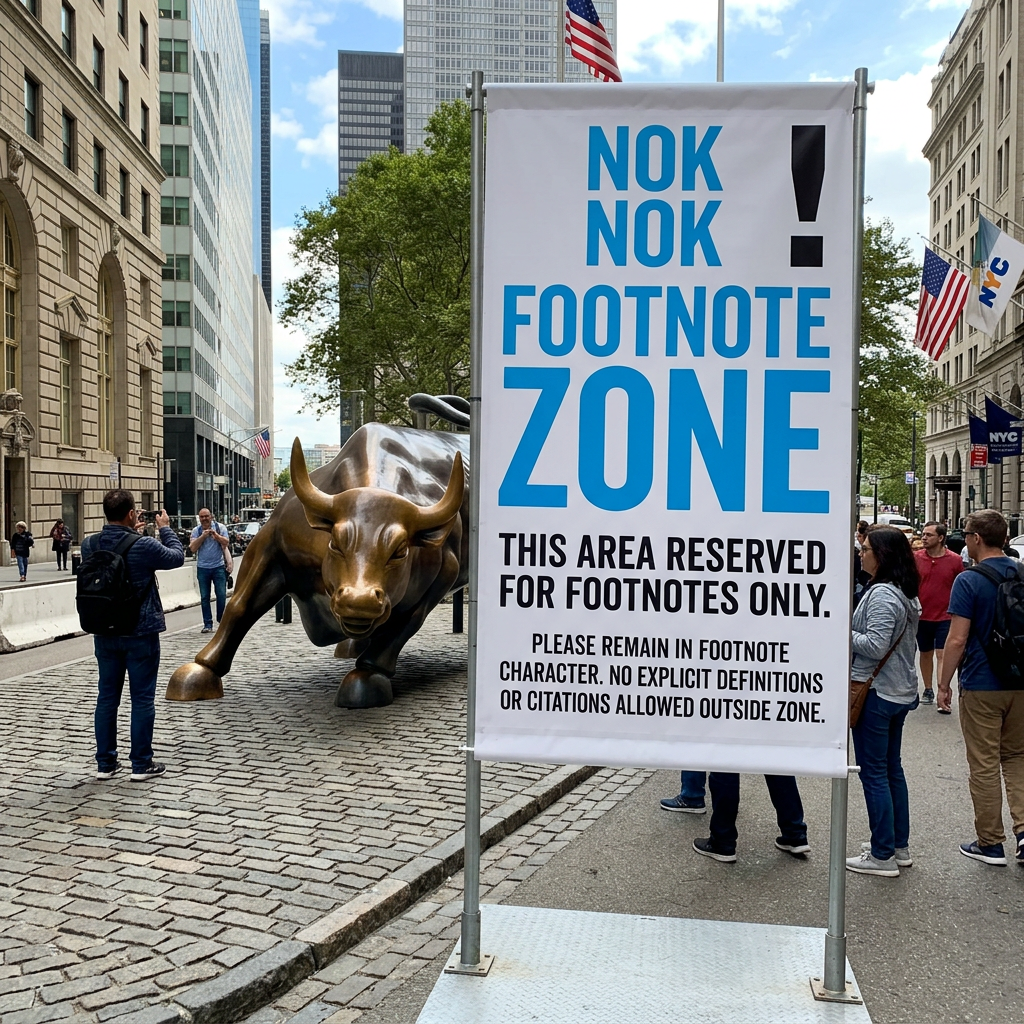
Footnote Zone for No reply. Slow reply. Unhelpful reply. Why doesn’t accessibility cover this?
Disclosure: The diagnostic tools referenced below were developed by NokNok, a specialist in online responsiveness tool design.
This Footnote Zone uses NokNok’s diagnostic toolkit to examine how the cognitive accessibility barriers and responsiveness failures described in this article can be identified, measured, and addressed.
- Email Finder: Organizations often hide behind “contact theatre,” presenting nominal reachability or obscuring direct email access to force users into inaccessible web forms. Email Finder scans an organization’s website and related public-facing materials for published email addresses, then reports on structural deficiencies, discrepancies, missing contact routes, or other contactability gaps.
- Reply Radar: Consumers face extended “cognitive holding times” due to delayed replies, ignored messages, and unreliable customer-response operations that force vulnerable enquirers to chase organizations. Reply Radar deploys targeted test emails and quantitatively measures reply rates, latency, response consistency, and related responsiveness benchmarks.
- Compliance Sniffer: Organizations frequently send unhelpful replies filled with empty platitudes or generic policy links that fail to answer the question, forcing cognitively challenged customers to interpret ambiguous instructions. Compliance Sniffer analyzes incoming responses for objective quality, clarity, relevance, escalation, and compliance benchmarks.
- Mystery Shopper: Customers encounter systemic user-experience breakdowns when forced out of their preferred channels, navigating broken escalation paths, or facing end-to-end contact failures that demand unnecessary repetition. Mystery Shopper executes a comprehensive end-to-end responsiveness UX audit, testing how a real user experiences the organization’s contact, response, and escalation pathways.
Disclosure: The diagnostic tools referenced in this Footnote Zone were developed by NokNok, a specialist in online responsiveness tool design. ReplyResearch may use NokNok tools, resources, or analysis when preparing coverage, while retaining responsibility for its editorial decisions, including what topics to cover, what sources to cite, and how stories are presented. Read the full ReplyResearch Collaborative Disclosure Policy here.

Sources and relevant reading for No reply. Slow reply. Unhelpful reply. Why doesn’t accessibility cover this?
- Title: Poor customer service cost energy and broadband customers £298 million a year
- URL: https://www.which.co.uk/news/article/poor-customer-service-cost-energy-and-broadband-customers-298-million-last-year-aNOTq0n4itHK
- Date: September 25, 2024
- Relevance to the article: This official consumer research report details the exact figures cited regarding the £298 million and 27.3 million hours lost by UK energy and broadband customers due to poor customer service. It provides foundational evidence for the widespread problems of unhelpful replies, long waits, and the frequency with which customers abandon their attempts to resolve inquiries.
- Title: FCA – vulnerable customer review
- URL: https://www.dentons.com/en/insights/articles/2025/april/3/fca-vulnerable-customer-review
- Date: April 03, 2025
- Relevance to the article: This legal review analyzes the Financial Conduct Authority’s 2025 findings on the treatment of customers in vulnerable circumstances. It directly supports the article’s point that people with multiple vulnerability characteristics continue to experience worse communication outcomes. It also reinforces the necessity for accessible communication channels and tailored support when customers face administrative barriers.
- Title: Financial Lives 2024: Impacts of the increased cost of living
- URL: https://www.hymans.co.uk/insights/financial-lives-2024-impacts-of-the-increased-cost-of-living
- Date: May 14, 2024
- Relevance to the article: This analysis explores the broad findings of the FCA’s Financial Lives 2024 survey. It supports the article’s examination of how consumers attempt to contact financial services providers and highlights the overall difficulty consumers face when attempting to manage vital services or achieve resolutions.
- Title: Cognitive Accessibility Objective: Ensure Processes Do Not Rely on Memory – W3C
- URL: https://www.w3.org/WAI/WCAG2/supplemental/objectives/o6-memory/
- Date: April 29, 2021
- Relevance to the article: This official guidance from the World Wide Web Consortium serves as the basis for the article’s arguments regarding cognitive holding time and memory barriers. It explicitly details how processes that force individuals to remember previous steps or retain context – such as dealing with long delays or chasing unanswered emails – create severe accessibility failures for people with memory or cognitive impairments.
- Title: Delta’s flight delays and cancellations prompt Department of Transportation investigation
- URL: https://www.opb.org/article/2024/07/23/delta-flight-delays-and-cancellations-prompt-dept-of-transportation-investigation/
- Date: July 23, 2024
- Relevance to the article: While focusing on a major US airline incident rather than the UK Which? investigation, this report highlights the broader aviation industry’s struggles with customer service and unresponsiveness during major disruptions in 2024. It illustrates the systemic communication failures and lack of timely support that airline passengers face when attempting to find resolutions, mirroring the article’s complaints regarding major airlines and inaccessible contact routes.


