


 Dr. Mark Friedman
You can checkout any time you like, but…
What The Atlantic’s article about sludge reveals when we look at who can reach an organisation, who gets a response and who is left chasing… forever?
Chris Colin’s article in The Atlantic begins with his Ford Escape apparently losing power steering and braking assistance while he was driving. The immediate danger passed, but the struggle to get the fault investigated continued for months. (The Atlantic)
The dealership couldn’t reproduce the intermittent problem. Ford opened a case, but Colin describes unanswered calls, repeated transfers, inconsistent information and a case representative who became difficult to reach. The machinery of customer service was active, yet little seemed to move. (The Atlantic)
Colin calls the accumulated waiting, repetition and procedural obstruction “sludgeâ€. His larger question is whether experiences like his are simply the result of overloaded systems, or whether some organisations benefit when customers become too exhausted to continue. (The Atlantic)
The article’s first issue is the possibility of deliberate obstruction
The sharpest claim in the article is contained in its headline: the dropped call may have been on purpose. Colin presents examples suggesting that some companies can save money when refunds, cancellations, repairs or compensation become difficult to obtain. (The Atlantic)
That doesn’t mean every long wait or broken transfer is deliberate. Old technology, staff shortages, poor training and disconnected systems can produce much the same experience without anyone planning it.
The difficulty is that intent can be hard to see from the outside. We experience the failed route, while the organisation holds the information about budgets, staffing, targets and design decisions that might explain why it failed.
What can we say without claiming too much?
ReplyResearch would start by separating the customer’s evidence from the organisation’s motive.
A customer can often show that a number wasn’t answered, a message received no reply, an agent couldn’t act, or a case went round several departments. Those facts don’t necessarily show that senior managers intended to wear anyone down.
They can, however, raise questions about what the organisation accepts. If the same friction keeps appearing, customers keep abandoning their claims and nothing changes, the distinction between purposeful obstruction and tolerated obstruction may begin to matter less from our side.
Sludge isn’t only delay
Colin’s experience involved waiting, but the article describes something broader. Sludge can include confusing requirements, repeated explanations, inaccessible staff, contradictory records and procedures that seem to return the customer to the beginning. (The Atlantic)
Cass Sunstein has described sludge as friction that reduces access to services, rights, licences and benefits. He argues that public and private organisations should routinely examine these burdens rather than treating them as harmless administrative detail. (dlj.law.duke.edu)
This adds something useful to Colin’s account. The problem isn’t simply that customer service feels unpleasant. The process may change who receives an outcome, because people with less time, confidence, money or stamina are more likely to disappear before reaching it.
Reachable on paper
Colin was able to contact Ford. He reached agents and had a case number. Looked at from inside a reporting system, that may appear to show that the company was reachable. (The Atlantic)
But reachability can’t sensibly mean only that a telephone call connected. The more useful question is whether the route took him to someone able to understand what had happened and get something done.
At ReplyResearch, this is the difference between a contact route existing and that route working. A company may have a phone number, form and chatbot while still being remarkably difficult to reach in any meaningful sense.
A reply isn’t necessarily a response
The article describes updates that arrived without much new information. Colin was told that the case remained under review and that his patience was appreciated, but those messages didn’t necessarily bring him closer to an answer. (The Atlantic)
This matters because organisations often measure responsiveness through first replies. An automatic acknowledgement or scripted answer may stop a timer, even though nobody has understood the issue, accepted responsibility or decided what should happen next.
From our side, a response is useful when it changes something. It might answer the question, correct a mistake, explain the next step, introduce an owner or give us a realistic time by which something will happen.
The performance of responsiveness
There is a particular kind of frustration in receiving polite communication that produces no progress.
The language may be warm. The organisation may acknowledge inconvenience, thank us for waiting and promise an update. Yet we’re still left trying to establish whether anyone has picked the issue up.
AI may make this problem harder to detect. It can produce immediate, fluent and sympathetic messages, but a well-written reply isn’t proof that the organisation behind it is any more able or willing to act.
Contactability means being able to get back to someone
Colin’s account also raises a problem beyond reachability and responsiveness. Even after a case was opened, he struggled to maintain contact with the person apparently responsible for it. (The Atlantic)
This is where contactability becomes useful. It concerns whether we can establish and continue a workable connection with someone who knows the history, can explain what’s happening and remains available while the issue is unresolved.
A named case handler can create reassurance, but the name means little if calls can’t reach them, messages aren’t returned and nobody else can explain what they’re doing.
Who owns the whole problem?
The article’s Ford story moved between a dealership, mechanics, customer-service agents and internal departments. Each part of the organisation appeared to hold only a piece of the case. (The Atlantic)
That kind of fragmentation can turn the customer into the coordinator. We carry the history between departments, explain what the previous person said and try to identify which part of the organisation has authority.
The extra work lands back on us because the organisation’s own parts don’t seem able to share enough information or responsibility. Each individual interaction may look ordinary internally, while the combined journey becomes exhausting.
Repetition is work
Having to tell the story again may sound like a minor irritation. It becomes more significant when the issue is complicated, upsetting or connected to safety, health, housing or money.
The organisation has failed to retain or move the information, so the person seeking help performs that task instead. We reconstruct dates, resend evidence and explain earlier decisions to another employee who may have no control over what happens next.
Administrative-burden research helps explain why this matters. It distinguishes the work of learning what to do, complying with requirements and absorbing the psychological cost of the process. Those burdens can deter eligible people from continuing. (The Atlantic)
The call-centre worker may be stuck too
Colin’s article includes former contact-centre workers who describe limited authority, pressure around escalation and performance measures that could conflict with helping the caller. (The Atlantic)
That makes the familiar demand to “speak to a human†more complicated. A human being who can’t see the full record, depart from a script, authorise a remedy or reach a decision-maker may be another stage in the same blocked process.
The employee may hear the problem perfectly well and still be unable to deal with it. From the customer’s point of view, the organisation has provided human contact without providing a human route to action.
Metrics can quietly produce sludge
The Atlantic article suggests that measures such as call length, escalation rates and compensation totals can shape how agents behave. An employee may be rewarded for ending the interaction quickly rather than understanding it fully. (The Atlantic)
No manager needs to order staff to frustrate customers directly. If helping takes longer, escalation damages a score and compensation counts against a target, the system may teach employees which outcomes the organisation actually prefers.
This is one place where ReplyResearch can add to the sludge discussion. Instead of looking only for evidence of deliberate obstruction, we can study whether ordinary operational measures repeatedly produce unresponsive behaviour.
Easy to join, difficult to leave
The article’s argument also connects with research and enforcement concerning dark patterns. These are designs that steer, confuse or obstruct people, including processes that make subscriptions easy to start and difficult to cancel. (Federal Trade Commission)
The Federal Trade Commission has described cancellation mazes, hidden terms and other designs that can impair consumer choice. A 2024 international review also found possible dark patterns across a large proportion of the selected subscription websites and apps it examined. (Federal Trade Commission)
This work adds a design perspective to Colin’s customer-service story. Sludge doesn’t have to appear in one dramatic barrier. It can accumulate across a journey, with each small obstacle making completion slightly less likely.
What happens over time matters
Researchers studying Amazon’s cancellation process have argued that dark patterns should be examined across the whole journey, rather than as isolated screens or individual tricks. Several modest barriers can have a larger combined effect. (arXiv)
The same approach makes sense for contact.
A single transfer may be reasonable. Another request to confirm an address may be necessary. A short wait may be unavoidable. But transfers, repetition, missing records and silence can combine into a process that very few people would have designed as a whole.
When giving up looks like success
Colin noticed that many sludge stories ended when the person finally decided to stop trying. The original issue wasn’t resolved; the effort required to pursue it had simply become too great. (The Atlantic)
Inside an organisation, that disappearance may look harmless. The customer stopped calling, the case was closed, the refund wasn’t paid and demand fell away.
ReplyResearch would treat abandonment differently. Silence after several failed contacts may be evidence that the route exhausted someone, not evidence that the problem disappeared.
What should organisations measure?
First-response time tells us something, but not enough.
We also need to know how long it took before someone understood the enquiry, whether an owner was identified, how many times the customer repeated themselves and whether the reply provided a next step that actually happened.
We should also ask how many people left before reaching anyone, how often customers changed channels and how many cases were closed without evidence that the underlying issue had been resolved.
Sludge doesn’t affect everyone equally
Colin recognises that he had the time and ability to keep pursuing Ford. Many people would have had to stop earlier. He connects this with research showing that administrative burdens can fall more heavily on people already facing disadvantage. (The Atlantic)
A process that requires repeated daytime calls is easier for someone with control over their working hours. A person dealing with illness, caring responsibilities, insecure work or limited digital access may have far less room to keep trying.
This means a route can technically be available to everyone while being realistically usable only by people with enough spare time, confidence and persistence.
Some friction may be necessary
Not every step is sludge. Organisations may need to verify identity, prevent fraud, protect privacy, diagnose complicated faults or make sure that scarce support reaches the right people.
Sunstein and Julien Gosset describe the real trade-off involved. Checks can screen out people who aren’t eligible, but they can also screen out people who are. The question is whether the burden is proportionate to what it protects. (Duke Law Scholarship Repository)
ReplyResearch shouldn’t assume that every obstacle must disappear. It should ask whether the organisation understands the cost of the obstacle, including the people who never complete the process and therefore vanish from its figures.
Sludge can cost the organisation too
The immediate saving from a blocked refund or avoided repair may be visible. The longer-term cost is harder to measure.
Repeated contact creates more calls, more handling and more frustrated employees. It can also hide useful information about product failures, confusing policies and parts of the service that aren’t working.
Recent writing on the wider “annoyance economy†adds another point. Friction affects employees as well as customers, and the best managers may be those who treat themselves as responsible for other people’s time. (Financial Times)
AI could remove sludge
AI might help by reading unstructured messages, finding earlier correspondence and sending the enquiry to the right team. It could reduce the need for customers to understand the organisation’s structure before they can ask for help.
It might also help employees see the whole history without asking us to repeat it.
Used that way, AI absorbs complexity for the customer. The test would be whether fewer people are sent round the houses and whether someone becomes accountable sooner.
AI could also make the performance more convincing
The alternative is a system that responds instantly but can’t act.
A chatbot might keep a customer inside a carefully worded conversation while making human contact difficult. Generated messages may sound attentive, even when they repeat policy, reject escalation or return the customer to the same instructions.
The risk isn’t only that machines will be rude or inaccurate. It’s that synthetic politeness may make an unresponsive organisation look more responsive than it is.
Test the route from the outside
Sunstein has argued for routine sludge audits, weighing the burden of procedures against any benefit they provide. (dlj.law.duke.edu)
A ReplyResearch audit would include the routes people are told to use. It would test what happens when someone actually calls, emails, submits the form, replies to the acknowledgement and asks for escalation.
The official map may show several channels and a clear process. The lived route may reveal unanswered messages, no-reply addresses, departments that can’t share records and staff who aren’t allowed to finish what they started.
Contact is part of the service
Colin’s car problem concerned a potentially serious mechanical fault, but much of his effort went into navigating the response around it.
In practice, a service isn’t only the product, warranty, repair or decision. It is also the way we get help when that process fails.
A company that offers a remedy but makes the route to it exhausting hasn’t separated service from communication. The communication has become part of the remedy, and possibly part of the reason it remains out of reach.
What the Atlantic article leaves us with
The article makes a strong case that some customer-service friction may be commercially useful, and that performance systems can encourage obstruction without anyone openly describing it that way. (The Atlantic)
The wider sludge literature adds several things. It shows that burdens can alter who receives an outcome, that small obstacles accumulate across journeys, and that supposedly protective checks can exclude legitimate claimants as well as improper ones. (dlj.law.duke.edu)
The ReplyResearch lens brings the contact route itself into focus. Can we find a way in, receive something more useful than an acknowledgement and remain connected to someone able to take responsibility?
Chris Colin eventually received renewed contact from Ford, but the experience he describes leaves a wider question. (The Atlantic)
When an organisation looks reachable, replies often enough to appear responsive, yet leaves us doing the chasing and coordination, are we experiencing a struggling service, a tolerated failure, or a system quietly benefiting when we give up?
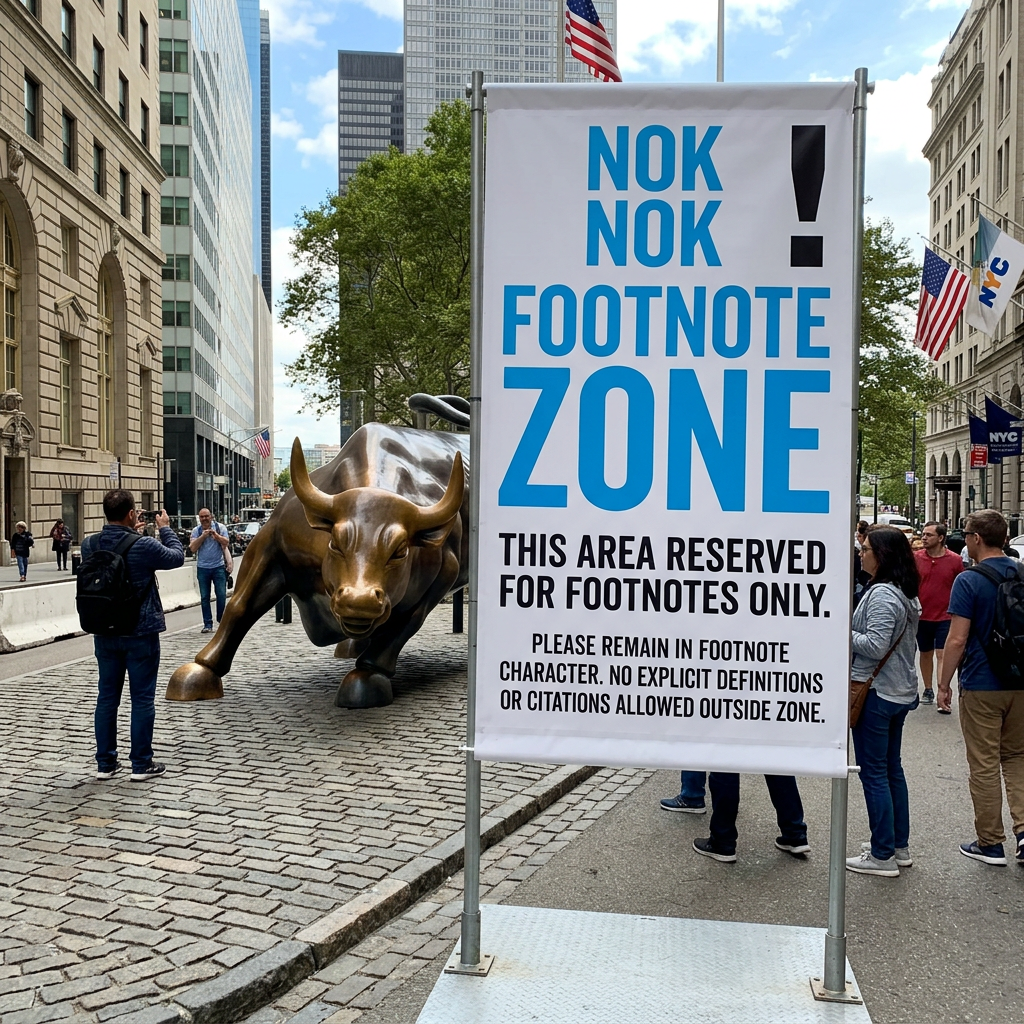
Footnote Zone for Is Customer Service Having a Hotel California Moment?
Disclosure: The diagnostic tools referenced below were developed by NokNok, a specialist in online responsiveness tool design.
This Footnote Zone uses NokNok’s diagnostic toolkit to examine how the reachability, responsiveness and contactability failures described in this article can be identified, measured and tested from the customer’s side.
- Email Finder – Cause and cure: The article describes organisations that appear reachable because they publish contact channels, even though those routes may be hidden, abandoned or unable to connect customers with anyone who can act. Email Finder scans an organisation’s website and related public-facing materials for published email addresses, then reports missing routes, inconsistencies, abandoned addresses and other structural contactability gaps.
- Reply Radar – Cause and cure: Colin’s experience included unanswered calls, delayed updates and repeated attempts to reach a case representative, raising the possibility that a recorded contact may receive no timely or dependable response. Reply Radar deploys targeted test emails and quantitatively measures reply rates, response latency and consistency, showing whether the organisation’s stated contact routes are supported by a functioning response operation.
- Compliance Sniffer – Cause and cure: The article distinguishes meaningful help from polite messages that acknowledge frustration while providing little information, ownership or progress. Compliance Sniffer analyses incoming replies against objective benchmarks for clarity, relevance, response quality, escalation and compliance, helping identify empty platitudes, evasive language, automated loops and replies that perform responsiveness without delivering it.
- Mystery Shopper – Cause and cure: The wider problem described in the article emerges across the complete journey: customers repeat information, move between teams, encounter broken escalation routes and may eventually abandon an unresolved case. Mystery Shopper executes an end-to-end responsiveness user-experience audit, testing what happens when a real person tries to find a route, make contact, obtain a useful reply, escalate the matter and remain connected until someone takes responsibility.
Disclosure: The diagnostic tools referenced in this Footnote Zone were developed by NokNok, a specialist in online responsiveness tool design. ReplyResearch may use NokNok tools, resources or analysis when preparing coverage, while retaining responsibility for its editorial decisions, including article topics, source selection, analysis and presentation. Read the full ReplyResearch Collaborative Disclosure Policy.

Sources and relevant reading for Is Customer Service Having a Hotel California Moment?
The following sources support and extend the article’s discussion of sludge, customer exhaustion, deliberate friction, abandonment, automation and the difficulty of reaching someone able to act. This section follows the attached sources specification.
- That Dropped Call With Customer Service? It Was on Purpose – Chris Colin, The Atlantic, 29 June 2025.
The article on which the commentary is based. Colin uses his attempt to secure help after a potentially dangerous vehicle fault to examine long waits, repeated transfers, missing ownership and the possibility that some customer-service obstruction is commercially useful. (The Atlantic) - Vulnerability to and Acceptability of Different Types of Sludge – Leonhard K. Lades, Margaret Samahita, Lucie Martin, Cass R. Sunstein and Martin Baekgaard, Behavioural Public Policy, 3 November 2025.
This research adds evidence to the article’s argument that sludge doesn’t affect everyone equally. It examines why some people may be more vulnerable to waiting, complex paperwork, confusing websites and other burdens, and compares how acceptable different forms of sludge appear to the public. (Cambridge University Press & Assessment) - Taking on the Annoyance Economy – Chad Maisel and Neale Mahoney, Groundwork Collaborative, 9 February 2026.
This report broadens the discussion from individual service failures to their collective economic cost. It examines time lost to customer-service calls, insurance administration, spam, hidden fees and difficult cancellations, supporting the article’s view that apparently small frustrations can impose substantial burdens. (Groundwork Collaborative) - The Annoyance Economy Isn’t Going Anywhere – Emma Jacobs, Financial Times, 19 April 2026.
Jacobs explores how obstructive cancellations, unhelpful chatbots and administrative tasks consume people’s time. The article adds the idea that good managers should act as trustees of other people’s time, which relates closely to the commentary’s treatment of repetition and chasing as labour transferred to the customer. (Financial Times) - FTC, ICPEN and GPEN Announce Results of Review of Dark Patterns Affecting Subscription Services and Privacy – Federal Trade Commission, 10 July 2024.
This international review examined 642 subscription websites and apps. It supports the section about services that are easy to join but difficult to leave by documenting design practices that may steer people, obscure choices or make cancellation and privacy decisions harder. (Federal Trade Commission) - Dark Patterns in the Opt-Out Process and Compliance With the California Consumer Privacy Act – Van Hong Tran and colleagues, 13 September 2024.
This study examines obstacles placed in privacy opt-out journeys. It adds to the article’s argument that friction should be assessed across the complete customer journey, since organisations may use a sequence of modest hurdles rather than one obvious barrier. (arXiv) - Silent Abandonment in Text-Based Contact Centers: Identifying, Quantifying, and Mitigating Its Operational Impacts – Antonio Castellanos, Galit B. Yom-Tov, Yair Goldberg and Jaeyoung Park, 15 January 2025.
This research is directly relevant to the article’s argument that customers who disappear haven’t necessarily been helped. It studies people who silently leave text-based support queues and shows why abandonment can be difficult for organisations to detect or distinguish from continued waiting. (arXiv) - Deploying Chatbots in Customer Service: Adoption Hurdles and Simple Remedies – Evgeny Kagan, Brett Hathaway and Maqbool Dada, 8 April 2025.
The authors identify “gatekeeper aversionâ€: customers’ reluctance to enter a chatbot process when they expect it may fail before transferring them to an expert. The findings support the commentary’s concern that automation can become another obstructive stage unless its limits and escalation routes are clear. (arXiv) - AI Won’t Fix the Real Issue With Customer Service – Anjli Raval, Financial Times, 17 March 2025.
Raval argues that AI may patch over service systems already shaped by cost-cutting, scripting and an emphasis on efficiency. The article supports the distinction between receiving a polished or empathetic message and reaching a person with the freedom and authority to help. (Financial Times) - Gartner Predicts 50% of Organizations Will Abandon Plans to Reduce Customer-Service Workforces Due to AI – Gartner, 10 June 2025.
This source provides a counterweight to claims that customer service can become largely agentless. Gartner reports that many organisations are reconsidering workforce-reduction plans, supporting the article’s argument that complex, sensitive or unusual cases still require accessible human judgement. (Gartner) - AI Shakes Up the Call Center Industry, but Some Tasks Are Still Better Left to Humans – Associated Press, September 2025.
This report examines both sides of AI-enabled customer service. It describes tools that give agents better context and remove repetitive work, while noting that people remain important for difficult or sensitive cases. It relates to the article’s distinction between automation that absorbs complexity and automation that blocks access. (AP News) - “Stupid Robot, I Want to Speak to a Human!†User Frustration Detection in Task-Oriented Dialog Systems – Mireia Hernandez Caralt and colleagues, 26 November 2024.
This paper studies how automated systems detect frustration in real customer conversations. It is relevant to the risk of synthetic responsiveness: recognising that a customer is distressed is useful only when the system can change course, preserve context or arrange effective human escalation. (arXiv)


